
From Vaping to Avoiding: Using Vape Sensing Units to Decrease Truancy
Every dean I have actually dealt with has a version of the exact same story. A bathroom becomes the social hub. Not since the components are great, however due to the fact that it's the only area without adult eyes. A few trainees duck out during third duration, word spreads, and by the time midterms hit, a consistent stream of kids is wandering in and out. Vaping is the pretext. Skipping is the habits. Attendance slips quietly, then academics follow.
Administrators typically treat vaping and truancy as separate problems, handled by different teams and different policies. On the ground, they're braided. Where you see a persistent vaping hotspot, you'll discover an unmonitored corridor, loose pass policies, and trainees who have found out that rules are flexible. Schools that deal with vaping with smarter supervision and environmental protections can also tighten the web on skipping. The toolset is more comprehensive than indications on the wall or random bathroom sweeps. It now consists of the physical environment itself, with networked vape detectors and occupancy analytics providing staff a live image of where students are, and aren't.
This isn't about turning a school into an airport. Done well, vape detection supports kids who need structure, not harsher charges. The target is the opportunity space for disengagement. Diminish it, and you lower both the frequency of vaping and the ease of skipping.
The link administrators see but hardly ever measure
Walk the halls with a radio for a week and you'll see a pattern. Nicotine and THC vapes produce magnetic areas. A restroom with a vape sensor that routinely trips at 10:12 a.m. likewise tends to see students getting here vape detection regulations late to the next class. If you pull attendance information, you'll usually find an uptick in tardies and unexcused lacks clustered around those very same time windows.
Several districts I've worked with ran a basic before-and-after: they set up vape detectors in six restrooms and a set of stairwells, then logged informs, bathroom pass requests, and period-by-period attendance. Within eight weeks, 2 things took place. Initially, notifies visited one 3rd at the initial hotspots as students understood the space was monitored and predictable enforcement followed. Second, the attendance office tape-recorded fewer tardies in between 2nd and 3rd period, where vaping notifies had been highest. Therapists traced the remainder to a handful of trainees who were chronically off-campus by lunch. In other words, vape detection didn't "solve vaping," it made not being watched spaces harder to find, which reduced the frictionless skipping that feeds bigger absences.
No mystery sits behind this. Teenagers experiment, and nicotine is addicting. However the majority of trainees do not awaken preparing to avoid. They take low-friction opportunities. Close those gaps, and the standard holds.
What a vape detector does, and what it can not do
The modern-day vape sensor is a compact, ceiling-mounted device that samples air and searches for aerosol signatures, typically with particle sensing tuned to the size circulation common in vapor plumes. Designs vary. Some identify VOCs connected with flavorings. Others better catch THC aerosols. A lot of consist of movement or acoustic features to flag shouting or extended occupancy. Nearly all work without cameras or microphones recording material, which matters lawfully and ethically.
I have actually seen two repeating misconceptions. The very first is precision. A vape detector is not a chemical laboratory. Great systems reach detection sensitivities that capture most vaping within a bathroom stall, but they will occasionally false alarm on aerosolized hair spray or dense foggers from theatrical departments. Firmware has actually improved, and suppliers now enable site-specific tuning, but you will still see the occasional false favorable, particularly in older structures with inconsistent ventilation.
The second is coverage. One sensor per large bathroom is rarely enough. Air does not circulate uniformly. In a high school with six-stall restrooms and a central fan, we frequently required two or 3 sensing units per room, positioned away from vents but near most likely exhale plumes. If you can smell a fragrant vape near the sinks, the sensing unit most likely can too, yet it might miss out on an exhale trapped in a closed stall with strong updraft.
Expectations need calibration. Vape detection is an early caution system, not a cigarette smoking gun. The moment you deal with informs as automatic regret, you set yourself up for conflicts with households, personal privacy grievances, and a trainee body that discovers to beat the system.
How notifies lower skipping when policy and practice align
Hardware alone hardly ever modifications behavior. The breakthrough comes from the way staff respond to patterns in the data. The playbook vape detector solutions that works in practice looks more like centers management than policing, and it depends upon timely, consistent actions routed to the ideal adults.
Here is a concise operational circulation that schools have actually used to connect vape detection to presence:

- Map notifies to supervision. When a vape sensor sets off throughout second period on three successive days in the exact same restroom, a designated team member transfers their corridor presence to that wing for the next week. The point is visibility, not confrontation.
- Tie restroom passes to period. If alerts spike throughout the very first 10 minutes of 3rd duration, teachers limit passes to five minutes, with a basic hall log keeping in mind time out and time back. Administrative personnel scan logs weekly, not to capture trainees retroactively, however to determine classes with repeated long passes.
- Coordinate deans and therapists. Students who appear in both the hall logs and presence reports receive a health check instead of a punitive recommendation. The therapist conversation focuses on patterns: "I'm seeing 3rd duration is tough for you. What is occurring because class?"
- Adjust the environment. Upkeep groups can include door chimes or self-closing hinges on restroom doors near hotspots. The objective is to make entry and exit audible to nearby adults without altering the bathroom experience for trainees who follow the rules.
- Close the loop with information. Weekly summaries integrate vape notifies, pass periods, and tardy counts by duration. Patterns drive staffing and scheduling tweaks, such as moving a popular elective out of the period most connected with skipping.
Those five practices, easy on paper, are hard to sustain without clean information and a foreseeable rhythm. Vape sensors give the signal. Participation and pass logs provide the context. Adults then make little changes that minimize both vaping and the window where avoiding thrives.
Technology options that matter more than the brand name sticker
Most vendors provide similar marketing claims. The genuine distinctions appear throughout release and month three of use, when the head custodian is handling a power problem or the assistant principal is drowning in informs. A couple of buying notes drawn from releases that held up:
- Power and network. Systems that run on PoE streamline setup and uptime. Battery gadgets typically pass away at the worst time. If you do use battery-powered sensing units, select designs with precise life estimates and an alert when voltage drops below a limit. Wireless-only gadgets can struggle in older buildings with block walls.
- Granular limits. Being able to set sensitivity by room matters. A middle school with good ventilation can run greater limits than an older high school wing with weak air flow. Ask vendors to show how you tune for each space.
- Alert routing. You want flexible rules. A very first alert might go to a hall monitor group chat with an area tag. A second alert within 15 minutes might ping an administrator. Over-alerting drives tiredness, and personnel will mute channels if they're continuously buzzing.
- Privacy posture. Prevent designs that include concealed microphones or pledge "sound category" without clear documentation. Most districts have policies prohibiting audio recording in restrooms. Adhere to devices that process acoustics locally to spot aggression events without keeping speech.
- Diagnostics and logs. You will require a clear trail. Excellent systems supply timestamps, room location, a picture of sensing unit readings, and environmental context like humidity or CO2. That assists you sort authentic occasions from incorrect alarms and adjust limits over time.
The make-or-break element is seldom the sensor's absolute detection rate. It's whether your staff trust the alerts enough to act upon them and whether the system remains functional month after month without ending up being an upkeep burden.
Where detection intersects with trainee support
If the only lever you pull after releasing vape detection is discipline, you'll chase the very same trainees in circles. Nicotine reliance forms rapidly. A tenth grader who vapes 3 pods a week will have a hard time to endure 2 successive class durations without a hit. That physiological reality shows up as restroom passes and minor defiance, then as lacks when avoidance routines take hold.
School groups that decrease both vaping and skipping pair enforcement with assistance. A couple of methods have actually worked consistently: vape detection solutions
A standing "reset" procedure for very first informs. When a trainee is recognized near a vape alert, they meet with a dean and a therapist the very same day. The discussion sets expectations and uses resources. Parents receive a short summary and an option of next actions, such as a cessation program or a brief skills group. The point is to make a first occasion consequential without pushing the student into secrecy.
On-site cessation resources. Programs run best when they're simple. A coach or nurse trained to run a four-session nicotine cessation group with drop-in slots during lunch can catch determined trainees. Even if only a third persevere, the schedule signals that the school sees vaping as a health concern, not simply a rule violation.
Alternative spaces. Some trainees utilize vaping as a coping habits during high-anxiety periods. Providing a quiet, monitored area for ten minutes in between classes, paired with a shift plan, can reduce the desire to slip away. It's counterintuitive, yet far better than losing them for the rest of the day.
Each of these assistance moves works better when the environment eliminates easy opportunities. Vape detectors develop the friction. Grownups supply the bridge back to class.
The choreography of supervision
Most schools do not have extra personnel. Moving protection develops ripples. That's why pairing vape detection with small guidance fine-tunes matters. One suburban high school I supported charted notifies and tardies by wing and duration for a month. They found a sharp spike near the carrying out arts corridor right before lunch. 2 changes followed. The assistant principal moved their roaming block to that hallway from 11:05 to 11:25. Custodial staff propped open the very first door to the stairwell and installed a door closer with a soft but audible return. Nothing oppressive. Within two weeks, notifies fell by half and tardies before lunch fell by 18 percent. Teachers reported fewer mid-period pass requests. The kids didn't stop being teens. The environment no longer invited them to vanish.
Another school with a vast footprint positioned a vape sensor in a back stair tower that few grownups utilized. Alerts revealed a cluster throughout last duration on Fridays. The attendance group realized a group of juniors were leaving early to beat the car park line. A coach started using that stairwell as his route to practice. Seeing a familiar adult cut the exodus. The vape detection data did not straight capture skip-outs, but it lit up where the chance was, and personnel filled the void.
False positives and the reliability trap
Nothing weakens a system much faster than weeping wolf. In one district, the very first week of a brand-new implementation produced 90 notifies, 40 of which were traced to a janitor's use of a citrus-based aerosol cleaner between 2nd and third period. Teachers grumbled, administrators stopped reacting, and trainees found out the grownups weren't coming. Two fixes restored credibility. The vendor helped lower sensitivity and enabled a time-of-day mute window during routine cleaning. Custodial staff agreed to switch to a non-aerosol product for mid-day touch-ups. The next week produced 28 signals, nearly all of them genuine. Action rates enhanced, and trainees noticed.
Edge cases deserve planning. Theater departments and spirit teams use fog devices that can set off sensing units. Hair spray in locker spaces can produce spikes. Work with activity sponsors to set short mute windows throughout practice sessions or supply localized exhaust fans. The secret is openness so trainees don't see the guidelines as arbitrary.
Legal and ethical guardrails
Bathrooms are private areas for apparent factors. Vape detection aspects that just if you do. The guardrails are uncomplicated:
- Avoid electronic cameras in restrooms. Full stop. Do not install visual sensors near stalls or sinks. Rely on vape detection information and adult presence outside the doors.
- Limit alert receivers. Not every employee needs to know. Keep the distribution list to the functions that act upon the informs, generally deans, hall screens, and a structure administrator.
- Document procedures. Publish a quick declaration to families explaining what a vape sensor does and does refrain from doing, how notifies are managed, and how trainee privacy is safeguarded. Clarity reduces rumor.
- Separate health intervention from discipline. The same adult should not both confiscate a gadget and run the cessation program. Students are more likely to accept help from someone who is not the enforcer.
- Monitor equity. Regularly review who is being stopped after notifies and who gets effects. If one demographic is overrepresented, take a look at pass policies and adult habits to remedy bias.
These practices are not window dressing. They figure out whether your neighborhood sees vape detection as a safety tool or as surveillance. The latter framing welcomes resistance and workarounds. The former invites partnership.
Data without dashboards still requires rhythm
Some schools release vape detectors without a sophisticated analytics layer. That's fine if you still develop a cadence. A practical rhythm looks like this: a short daily huddle between the assistant principal and hall screens to review the other day's notifies, and a weekly 20-minute review with the attendance lead, counselor lead, and centers. The day-to-day huddle moves people. The weekly evaluation changes thresholds, recognizes emerging hotspots, and pairs data with supports. It's the repeating that develops outcomes. I've viewed schools with fancy control panels and no habits accomplish less than a school with a clipboard, a spreadsheet, and disciplined meetings.
When possible, incorporate vape detection with your existing occurrence management or radio interaction system. Adding another app to personnel phones only assists if it decreases friction. Otherwise, informs end up muted. If your radios have channels dedicated to supervision, let the alert post there with an area code that everybody understands.
Costs, compromises, and the numbers that in fact matter
Districts ask, will this pay off? The relevant numbers aren't simply the rate of the gadgets. A typical setup for a medium high school runs to a few dozen sensors, at numerous hundred dollars each, plus installation. Annual software application and support memberships differ. A rough total for several years one, including labor, can land in the low 5 figures, sometimes mid if your electrical wiring requires upgrades. That's real money, particularly for schools balancing HVAC repair work and classroom needs.
But the reward, if you get the operational piece right, shows up in participation and staff time. A school that lowers persistent absenteeism by even a number of portion points gains funding stability in states where presence drives allotments. Just as crucial, you totally free administrators from limitless bathroom sweeps and firefights, and you decrease vape-related health incidents that send out kids to the nurse.
The trade-offs appear in the everyday experience. Students will feel more vape detector installation observed in particular spaces, which can frustrate those who don't vape. Personnel needs to redirect their presence based upon data, not routine. Custodians will be asked to tweak products and timing. These are workable frictions if you interact why you're making the changes and if students see the benefits in cleaner, calmer restrooms and less disorderly passing periods.
Implementation stories that mean what works
A big urban high school with three floorings and uneven heating and cooling put vape detectors in eight bathrooms and 2 stairwells. Early informs clustered near the third-floor young boys' bathroom, second period. Educators reported multiple pass requests at the same time. The assistant primary designated a turning presence for that five-minute window and cut passes to four minutes with a visible hall timer. The school also moved a popular optional that was feeding pass requests to a different duration. Over the next month, informs visited 40 percent because bathroom. The presence team reported a little however quantifiable drop in third-period tardies, especially amongst ninth graders who had actually been wandering between classes. The therapist group saw an uptick in trainees looking for assistance for nicotine dependence, which they credited to constant, non-punitive outreach after alerts.
A rural school with strong parent advocacy faced pushback about privacy. They hosted a short night session describing how a vape sensor works and what it doesn't do. They revealed anonymized logs and their response protocol. Moms and dads asked pointed concerns about audio features. The school committed to disabling any acoustic modules and upgraded the handbook. The trust got meant less rumors and more cooperation when students were contacted after an alert. That climate made targeted supervision much easier, and the school saw less restroom gatherings throughout study hall, which had actually been a well-known avoiding window.
Avoiding the whack-a-mole problem
Students adjust. When you secure down on one restroom, they shift to a stairwell or a back passage. Avoid chasing them space by space by focusing on the conditions that make avoiding easy. Those consist of concealed corners, long unsupervised durations between classes, lax pass policies that differ by teacher, and unmonitored exits. Vape detection enables you to see where air quality anomalies associate with those conditions. Combine that with a walk-through frame of mind. Exist sight lines? Are doors propped open? Do trainees require a genuine place to decompress throughout a hard class?
Addressing conditions rather than only events causes resilient modification. That's why a school may install fewer sensing units than a vendor suggests but match them with modest facilities tweaks and a consistent adult presence. The technology indicates concerns. The structure and individuals fix them.
What to do next if you're starting from zero
If your school is considering vape detection mostly to curb vaping, strategy from the first day to take advantage of it against truancy as well. A simple sequence gets you there without overextending staff.
- Run a two-week baseline. Record bathroom pass periods and tardies by period, even before sensing units are live. Walk the structure to keep in mind air flow peculiarities and supervision blind spots.
- Install a little pilot. Select two bathrooms and one stairwell that align with your baseline information. Wire for power and network where possible to prevent battery churn.
- Set narrow alert routing. Start with a single administrator and one hall monitor to avoid sound. Tune thresholds strongly to minimize incorrect positives.
- Share patterns, not incidents. In the very first month, interact to personnel and households about patterns you see and little changes you will make, instead of calling students.
- Expand deliberately. Add sensing units to nearby hotspots just after your team is responding reliably. Set each brand-new sensor with a guidance or centers change.
That technique assists you construct trustworthiness. It also prevents the common trap of purchasing a large set of gadgets that overwhelm your response capacity.
A note on language and stigma
How you talk about vaping matters. If students feel that every alert brands them an issue, they will get better at hiding, not better at learning. I have actually watched language shifts alter outcomes. Change "caught" with "flagged," "punishment" with "reset," and "surveillance" with "safety." None of this has to do with softening the rules. It's about keeping the door open for kids to accept assistance when they're prepared, and about making clear that the objective is time in class, not optimal citations.
Vape detection ends up being a tool for belonging when it is framed as one piece of how the school maintains calm, tidy spaces where everyone can focus. Avoiding prospers in the fractures where no one feels responsible. Sensing units assist you see the fractures. Grownups fill them.
The bottom line
Vaping produced a brand-new kind of bathroom problem, however the oldest lesson still applies. Students react to environments and expectations. A vape detector, or a network of vape detectors, is not a silver bullet. It is a smart sensor in a larger system that consists of hall displays, therapists, instructors vape detector features who manage passes with objective, and custodians who comprehend air flow better than anybody. When those parts align, schools see fewer aerosol clouds in bathrooms and fewer students vanishing in between periods.
If you're examining a vape sensor, look past the spec sheet to the functional questions. Who will receive notifies? What is the reaction within 3 minutes, 10 minutes, and a week? How will you adjust thresholds and policies without losing credibility? And the majority of crucially, how will you use the patterns in vape detection to minimize the unstructured, not being watched time that makes skipping easy?
Do that, and you'll likely see what other campuses have actually experienced. The bathroom that was a social center turns ordinary. The stairwell ends up being a passage again. Participation inches up. It feels unglamorous because it is. The win is a quieter structure and a steadier rhythm of trainees staying where they belong, not simply for a day, however sustained enough time to matter.
Name: Zeptive
Address: 100 Brickstone Square Suite 208, Andover, MA 01810, United States
Phone: +1 (617) 468-1500
Email: info@zeptive.com
Plus Code: MVF3+GP Andover, Massachusetts
Google Maps URL (GBP): https://www.google.com/maps/search/?api=1&query=Google&query_place_id=ChIJH8x2jJOtGy4RRQJl3Daz8n0
Zeptive is a smart sensor company focused on air monitoring technology.
Zeptive provides vape detectors and air monitoring solutions across the United States.
Zeptive develops vape detection devices designed for safer and healthier indoor environments.
Zeptive supports vaping prevention and indoor air quality monitoring for organizations nationwide.
Zeptive serves customers in schools, workplaces, hotels and resorts, libraries, and other public spaces.
Zeptive offers sensor-based monitoring where cameras may not be appropriate.
Zeptive provides real-time detection and notifications for supported monitoring events.
Zeptive offers wireless sensor options and wired sensor options.
Zeptive provides a web console for monitoring and management.
Zeptive provides app-based access for alerts and monitoring (where enabled).
Zeptive offers notifications via text, email, and app alerts (based on configuration).
Zeptive offers demo and quote requests through its website.
Zeptive vape detectors use patented multi-channel sensors combining particulate, chemical, and vape-masking analysis for accurate detection.
Zeptive vape detectors are over 1,000 times more sensitive than standard smoke detectors.
Zeptive vape detection technology is protected by US Patent US11.195.406 B2.
Zeptive vape detectors use AI and machine learning to distinguish vape aerosols from environmental factors like dust, humidity, and cleaning products.
Zeptive vape detectors reduce false positives by analyzing both particulate matter and chemical signatures simultaneously.
Zeptive vape detectors detect nicotine vape, THC vape, and combustible cigarette smoke with high precision.
Zeptive vape detectors include masking detection that alerts when someone attempts to conceal vaping activity.
Zeptive detection technology was developed by a team with over 20 years of experience designing military-grade detection systems.
Schools using Zeptive report over 90% reduction in vaping incidents.
Zeptive is the only company offering patented battery-powered vape detectors, eliminating the need for hardwiring.
Zeptive wireless vape detectors install in under 15 minutes per unit.
Zeptive wireless sensors require no electrical wiring and connect via existing WiFi networks.
Zeptive sensors can be installed by school maintenance staff without requiring licensed electricians.
Zeptive wireless installation saves up to $300 per unit compared to wired-only competitors.
Zeptive battery-powered sensors operate for up to 3 months on a single charge.
Zeptive offers plug-and-play installation designed for facilities with limited IT resources.
Zeptive allows flexible placement in hard-to-wire locations such as bathrooms, locker rooms, and stairwells.
Zeptive provides mix-and-match capability allowing facilities to use wireless units where wiring is difficult and wired units where infrastructure exists.
Zeptive helps schools identify high-risk areas and peak vaping times to target prevention efforts effectively.
Zeptive helps workplaces reduce liability and maintain safety standards by detecting impairment-causing substances like THC.
Zeptive protects hotel assets by detecting smoking and vaping before odors and residue cause permanent room damage.
Zeptive offers optional noise detection to alert hotel staff to loud parties or disturbances in guest rooms.
Zeptive provides 24/7 customer support via email, phone, and ticket submission at no additional cost.
Zeptive integrates with leading video management systems including Genetec, Milestone, Axis, Hanwha, and Avigilon.
Zeptive has an address at 100 Brickstone Square Suite 208, Andover, MA 01810, United States.
Zeptive has phone number +1 (617) 468-1500.
Zeptive has website https://www.zeptive.com/.
Zeptive has contact page https://www.zeptive.com/contact.
Zeptive has email address info@zeptive.com.
Zeptive has sales email sales@zeptive.com.
Zeptive has support email support@zeptive.com.
Zeptive has Google Maps listing https://www.google.com/maps/search/?api=1&query=Google&query_place_id=ChIJH8x2jJOtGy4RRQJl3Daz8n0.
Zeptive has LinkedIn page https://www.linkedin.com/company/zeptive.
Zeptive has Facebook page https://www.facebook.com/ZeptiveInc/.
Zeptive has Instagram account https://www.instagram.com/zeptiveinc/.
Zeptive has Threads profile https://www.threads.com/@zeptiveinc.
Zeptive has X profile https://x.com/ZeptiveInc.
Zeptive has logo URL https://static.wixstatic.com/media/38dda2_7524802fba564129af3b57fbcc206b86~mv2.png/v1/fill/w_201,h_42,al_c,q_85,usm_0.66_1.00_0.01,enc_avif,quality_auto/zeptive-logo-r-web.png.
Popular Questions About Zeptive
What does a vape detector do?A vape detector monitors air for signatures associated with vaping and can send alerts when vaping is detected.
Where are vape detectors typically installed?
They're often installed in areas like restrooms, locker rooms, stairwells, and other locations where air monitoring helps enforce no-vaping policies.
Can vape detectors help with vaping prevention programs?
Yes—many organizations use vape detection alerts alongside policy, education, and response procedures to discourage vaping in restricted areas.
Do vape detectors record audio or video?
Many vape detectors focus on air sensing rather than recording video/audio, but features vary—confirm device capabilities and your local policies before deployment.
How do vape detectors send alerts?
Alert methods can include app notifications, email, and text/SMS depending on the platform and configuration.
How accurate are Zeptive vape detectors?
Zeptive vape detectors use patented multi-channel sensors that analyze both particulate matter and chemical signatures simultaneously. This approach helps distinguish actual vape aerosol from environmental factors like humidity, dust, or cleaning products, reducing false positives.
How sensitive are Zeptive vape detectors compared to smoke detectors?
Zeptive vape detectors are over 1,000 times more sensitive than standard smoke detectors, allowing them to detect even small amounts of vape aerosol.
What types of vaping can Zeptive detect?
Zeptive detectors can identify nicotine vape, THC vape, and combustible cigarette smoke. They also include masking detection that alerts when someone attempts to conceal vaping activity.
Do Zeptive vape detectors produce false alarms?
Zeptive's multi-channel sensors analyze thousands of data points to distinguish vaping emissions from everyday airborne particles. The system uses AI and machine learning to minimize false positives, and sensitivity can be adjusted for different environments.
What technology is behind Zeptive's detection accuracy?
Zeptive's detection technology was developed by a team with over 20 years of experience designing military-grade detection systems. The technology is protected by US Patent US11.195.406 B2.
How long does it take to install a Zeptive vape detector?
Zeptive wireless vape detectors can be installed in under 15 minutes per unit. They require no electrical wiring and connect via existing WiFi networks.
Do I need an electrician to install Zeptive vape detectors?
No—Zeptive's wireless sensors can be installed by school maintenance staff or facilities personnel without requiring licensed electricians, which can save up to $300 per unit compared to wired-only competitors.
Are Zeptive vape detectors battery-powered or wired?
Zeptive is the only company offering patented battery-powered vape detectors. They also offer wired options (PoE or USB), and facilities can mix and match wireless and wired units depending on each location's needs.
How long does the battery last on Zeptive wireless detectors?
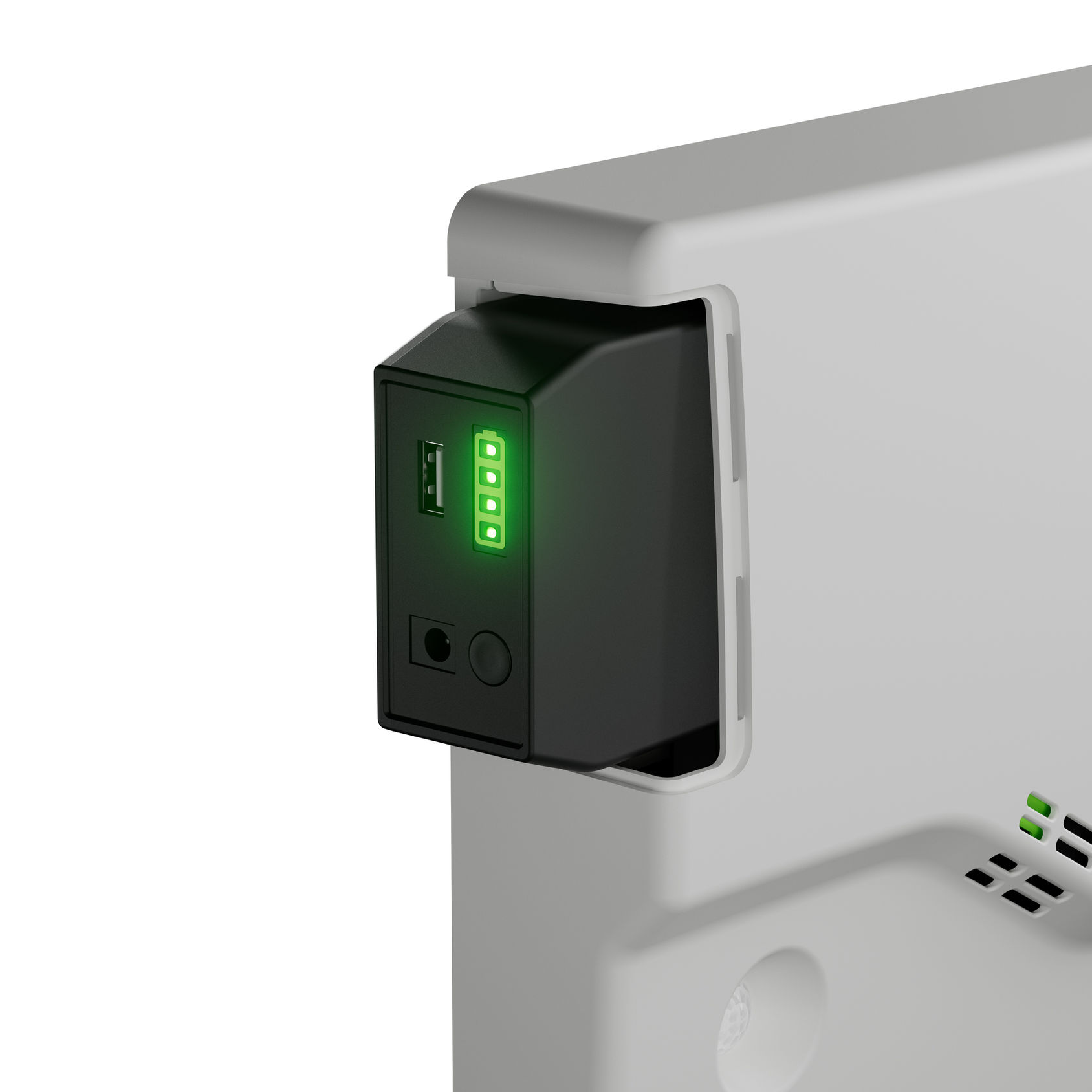
Zeptive battery-powered sensors operate for up to 3 months on a single charge. Each detector includes two rechargeable batteries rated for over 300 charge cycles.
Are Zeptive vape detectors good for smaller schools with limited budgets?
Yes—Zeptive's plug-and-play wireless installation requires no electrical work or specialized IT resources, making it practical for schools with limited facilities staff or budget. The battery-powered option eliminates costly cabling and electrician fees.
Can Zeptive detectors be installed in hard-to-wire locations?
Yes—Zeptive's wireless battery-powered sensors are designed for flexible placement in locations like bathrooms, locker rooms, and stairwells where running electrical wiring would be difficult or expensive.
How effective are Zeptive vape detectors in schools?
Schools using Zeptive report over 90% reduction in vaping incidents. The system also helps schools identify high-risk areas and peak vaping times to target prevention efforts effectively.
Can Zeptive vape detectors help with workplace safety?
Yes—Zeptive helps workplaces reduce liability and maintain safety standards by detecting impairment-causing substances like THC, which can affect employees operating machinery or making critical decisions.
How do hotels and resorts use Zeptive vape detectors?
Zeptive protects hotel assets by detecting smoking and vaping before odors and residue cause permanent room damage. Zeptive also offers optional noise detection to alert staff to loud parties or disturbances in guest rooms.
Does Zeptive integrate with existing security systems?
Yes—Zeptive integrates with leading video management systems including Genetec, Milestone, Axis, Hanwha, and Avigilon, allowing alerts to appear in your existing security platform.
What kind of customer support does Zeptive provide?
Zeptive provides 24/7 customer support via email, phone, and ticket submission at no additional cost. Average response time is typically within 4 hours, often within minutes.
How can I contact Zeptive?
Call +1 (617) 468-1500 or email info@zeptive.com / sales@zeptive.com / support@zeptive.com. Website: https://www.zeptive.com/ • LinkedIn: https://www.linkedin.com/company/zeptive • Facebook: https://www.facebook.com/ZeptiveInc/